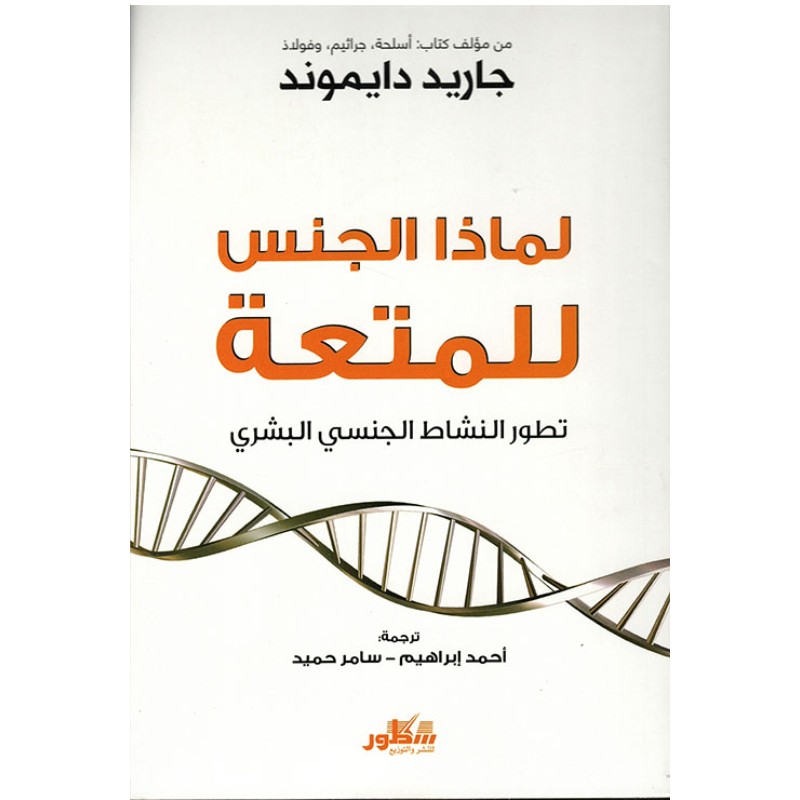
Why sex for pleasure develops human sexual activity - Jared Diamond
52ر.س
Out of Stock
Product description
Number of pages: 228
Publisher: Dar Satro
Book description: With a bold and attractive title, Jared Diamond raises in his book the question of why sex is for pleasure, which distinguishes human sexual life from that of other living beings. The book was published by Dar Satro in a series of distinguished psychology and sociology books, with precise and clear translation.
About the book Why Sex for Pleasure:
For us humans, animal sexual life seems strange, but our sexual life is truly the strange one. We are the only species that insists on practicing sex privately. And the strangest thing is that we do it at any time, even during periods of infertility, such as pregnancy or menopause. The female human does not know exactly when she ovulates. Nor does she announce it to males through color, scent, and sound changes that other mammals use.
For example, baboons show signs that can be observed from miles away, such as their red buttocks, and crows chirp during the mating season. That’s why humans have sex at any time so as not to miss the opportunity for fertilization and pregnancy.
The author asks why we differ fundamentally in these aspects and other aspects of our sexual activity from our closest ancestors, the great apes? And why do human females, almost alone among mammals, experience a period of menopause? The author states that due to the lack of clear signs of ovulation in females, men had to continue practicing sex with their partners all the time to ensure that their sperm would meet the ovum during intercourse. This led to the idea of sex or intercourse for pleasure.
At the same time, men are prompted to be ready for sex at any time regardless of whether the woman is pregnant, unprepared for conception, or even has stopped menstruating and can no longer conceive. The author points out that menopause in women is one of the strangest features of human sexual life, meaning the cessation of ovulation, rendering women infertile. This process does not align much with the usual pattern in the animal kingdom, especially since evolution favors spreading genes to increase the chances of producing new offspring.
Most animals remain fertile and capable of reproduction until death. Humans differ from even the great apes in this regard. This phenomenon helped mothers avoid using their physical energy on further reproduction, thus providing better care for their children. It also helped them live longer and gave them the opportunity to transfer experiences and knowledge to younger generations.

Questions you might have