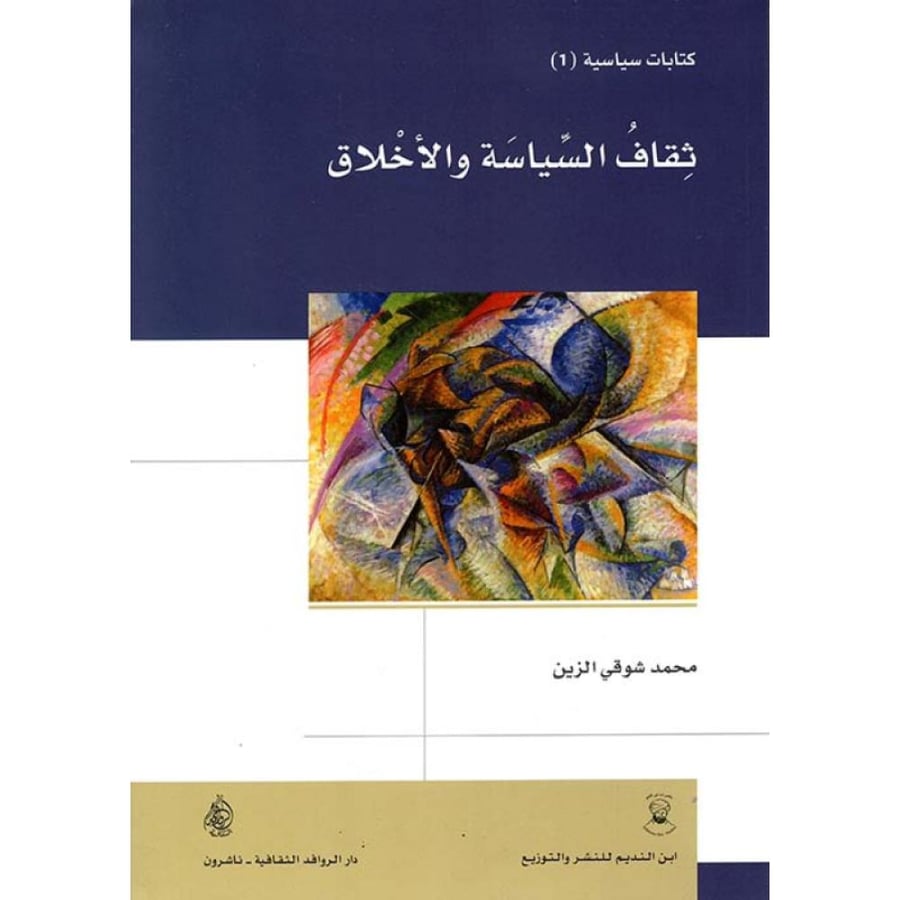
Culture of politics and ethics
59ر.س
Product description
When we evoke the question of politics and ethics, we study the human act in its uniqueness, spontaneity, behavior, as well as in its intention and interpretive nature. Politics and ethics are not merely human construction about the nature of governance to be performed or the behavior to be carried out, but they are "the question" that emerges from the human act at its initial threshold and its ontological purity—the "being" of the act itself. We learn from politics and ethics the nature of the human act before reading judgments, commands, prohibitions, and what should be done or avoided. The act precedes every will in its framing of an order or prohibition, in judgment or assumption. The chapters of this book are a reading into the initial threshold of the human act and how this act intersects with the structures established in politics and ethics, through various discussions concerning the interpretation of the act, understanding the nature of secularism, jurisprudence of the question of freedom and happiness, elucidating the meaning of democracy, studying the mysteries of alienation and otherness, questioning the subject of culture and resistance, and exploring the nature of revolution; all in a pressing dialogue with influential models such as Hannah Arendt, Jacques Derrida, Michel de Certeau, Johann Ehreard, Rainer Giraud, and Hisham Gawdat. The chapters of this book are readings and reflections guided by what we have called "culture," meaning what binds things together like cultural strings. This is the procedural concept we previously titled as a philosophical attempt at the philosophy of culture, supplemented with a particular rationality in the second part of the critique of cultural reason. It is re-invested within the scope of political writings, on the margins of the project and continuing it, in order to gain a broad perspective on the nature of the human act and its manifestations in culture, politics, and ethics.
