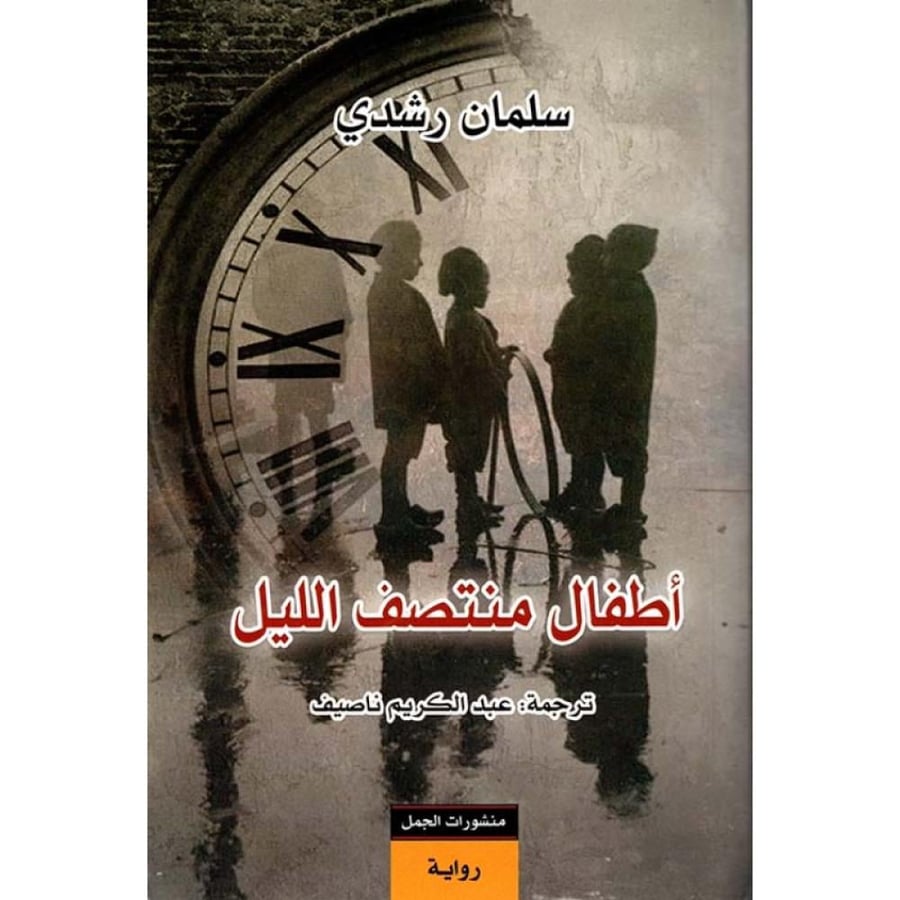
Children of midnight
59ر.س
Product description
Overview of the novel "Midnight's Children" by Salman Rushdie
"Midnight's Children" is the novel that won the Booker Prize in 1981. For the British-Indian author — the most controversial "Salman Rushdie" — and translated by "Abdul Karim Nassif".
In this work, the novelist talks about a period of liberation, which, as the author narrated in his testimony, begins from an old black-and-white image, dating back to 1964, hanging as a cheap frame on a wall. It inspired him to start his game of recalling the past, his past, his family’s past, and the past of "Bombay," which Rushdie calls "my lost city," and most importantly, his childhood and its wounds, all from London.
The narrator in his text alternates between the history of India, its independence, and its growth, and his own history and his city from which he was expatriated, "Bombay," a city built by strangers on reclaimed land. Like any exile or immigrant, who feels the sense of loss, the result was, as he says: "Imaginary homelands, more in mind than in reality." But in any case, he emphasizes that it is a novel of memory and about memory.
This is what we witnessed with the narrator of the novel, "Saleem," who doubts his memory, his narration, and his overlapping visions, which carried the errors of memory. But Salman Rushdie, in his reverence for this past, reaches the point of believing that — that is, the past — is "a country we all abandon always."
Here, the satirical view of the writer is embodied in the moments of announcing India's independence from Britain at midnight on August 15, 1947. He concludes his novel with a sarcastic remark.
