Training Bag - Interactive Training: Presentation and Participation Methods
119ر.س
149ر.س-20%Product description
📝 About the program
The goal of this program is to enable trainers and presenters to transition from the "lecturing" stage to the "interaction" stage. The program focuses on modern presentation styles and active learning activities based on problem-solving and scenario analysis, to ensure a lively and impactful training experience.
🎯 Targeted participants
👨🏫 Trainers and trainers who wish to develop their interactive skills.
🎓 Faculty members and teachers.
💼 Human resources managers and training officers in companies.
🎤 Public speakers and presentation providers.
🚀 Anyone seeking to deliver scientific material in a professional and engaging manner.
✅ Program objectives
🖼️ Recognize different styles and methods of presenting training material.
📊 Analyze the advantages and challenges of traditional and digital presentation methods.
🤝 Master direct interactive participation methods with the audience.
🛠️ Employ direct participation styles to serve training goals.
🧠 Review training activities based on thinking and problem-solving.
📂 Program topics
📍 Unit One: Engineering presentation styles for training material
Traditional vs. digital methods: When and how to use each?
Arts of direct interactive participation to break the ice and attract attention.
📍 Unit Two: Practical training strategies
Designing activities based on locations and simulations.
Employing higher-order thinking skills in solving training problems.
⏱️ Implementation details
⏳ Duration: 8 training hours.
🗓️ Days: Two days (4 hours each day).
📦 Training kit contents
💻 Presentation (PowerPoint)
👨🏫 Trainer’s guide
📖 Trainee’s guide
📄 Introductory manual
📚 Scientific references
📝 Trainer’s instructions
💡 Trainee’s instructions
📏 Pre-assessment scale
📈 Post-assessment scale
⭐ Training program evaluation
🎬 Visual materials (videos)
🖼️ Illustrative images
🧠 Mind maps
🎨 Introductory brochure
❓ Questions & Answers (Q&A)
Q: Does the program focus on theoretical or practical aspects?
A: The program is 70% practical, where trainees practice designing activities themselves.
Q: What is the difference between traditional and digital presentation in this program?
A: Traditional focuses on charisma and body language, while digital emphasizes interactive tools and media, and the program integrates both professionally.
Q: Do I need prior training experience to join the course?
A: No extensive experience is required; the program starts from the basics of presentation and advances to managing interaction at higher levels.
✅ Some important kits for you:
🎓 TOT Trainer Training Kit
This kit is the cornerstone for anyone seeking to master the arts of delivery and influence; it focuses on preparing capable trainers to analyze training needs and design kits scientifically, with mastery of body language skills and dealing with various trainee types.
🤖 Fundamentals of Artificial Intelligence
An exploratory journey into the future, reviewing core concepts of AI and how to harness its technologies to improve work and automation, giving the trainee a competitive advantage in the rapidly evolving digital job market.
🎤 Effective Training
This axis focuses on breaking the ice in training halls, by reviewing methods that ensure the highest levels of participation and interaction, transforming the educational process from mere lecturing into a lively experience that leaves a lasting impact on the recipient.
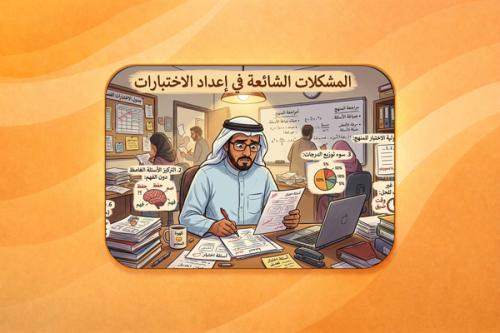
📝 Designing electronic assessments
This section covers modern tools and methodologies for building accurate and fair digital evaluation tools, focusing on question formulation and automated result analysis, saving time and effort and ensuring measurement accuracy.
🛡️ Introduction to Cybersecurity
In the age of data, protection becomes a priority; this section raises awareness about digital risks and how to protect personal and organizational information from breaches, serving as a security shield for every technology user.
📑 E-learning strategies
This section reviews the latest models of remote and blended learning, and how to design a stimulating virtual learning environment based on active learning, ensuring high-quality continuity of education and overcoming geographical barriers.
🧠 Critical thinking skills in teaching
Not just a skill, but a way of life; this section focuses on enabling teachers and trainers to instill questioning and analytical thinking among students, moving away from rote memorization towards logical thinking and problem-solving.
💻 Managing virtual classrooms and labs
This section covers the organizational and technical aspects of managing groups in the digital space, from choosing suitable platforms to controlling interaction and managing technical tools to ensure smooth and disciplined training processes.

From Makkah Province
Questions you might have