MEM TQ-4050 40x50cm Industrial Automatic Double Press
13800ر.س
Product description
MEM TQ-4050 40x50cm Automatic Double-Sided Press with Laser
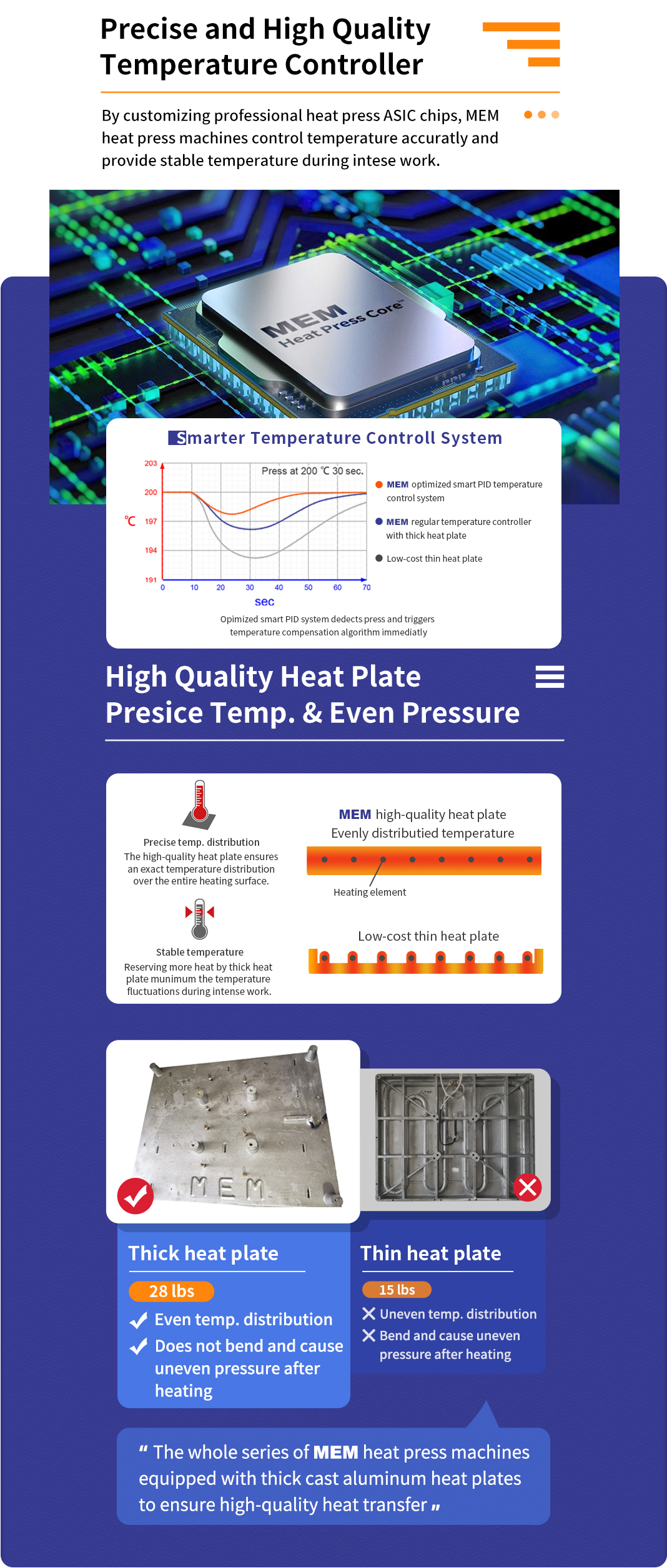
The latest thermal printing technology using an automatic dual press with a laser system for precise positioning and increased printing efficiency.
The MEM TQ-4050 Automatic Dual-Laser Press is an ideal solution for professionals in the sublimation printing industry. This professional machine delivers fast and precise printing on a variety of materials, such as fabrics, wood, ceramics, metals, and more. It features a laser system for easy, precise print positioning, enhancing the quality of results and increasing productivity.
- Features: Working size: 40 x 50 cm per station, allowing for easy printing of various and large designs.
- Built-in laser system: Helps accurately locate the print position to increase printing efficiency.
- Automatic control: Allows you to set the temperature and time for each station independently.
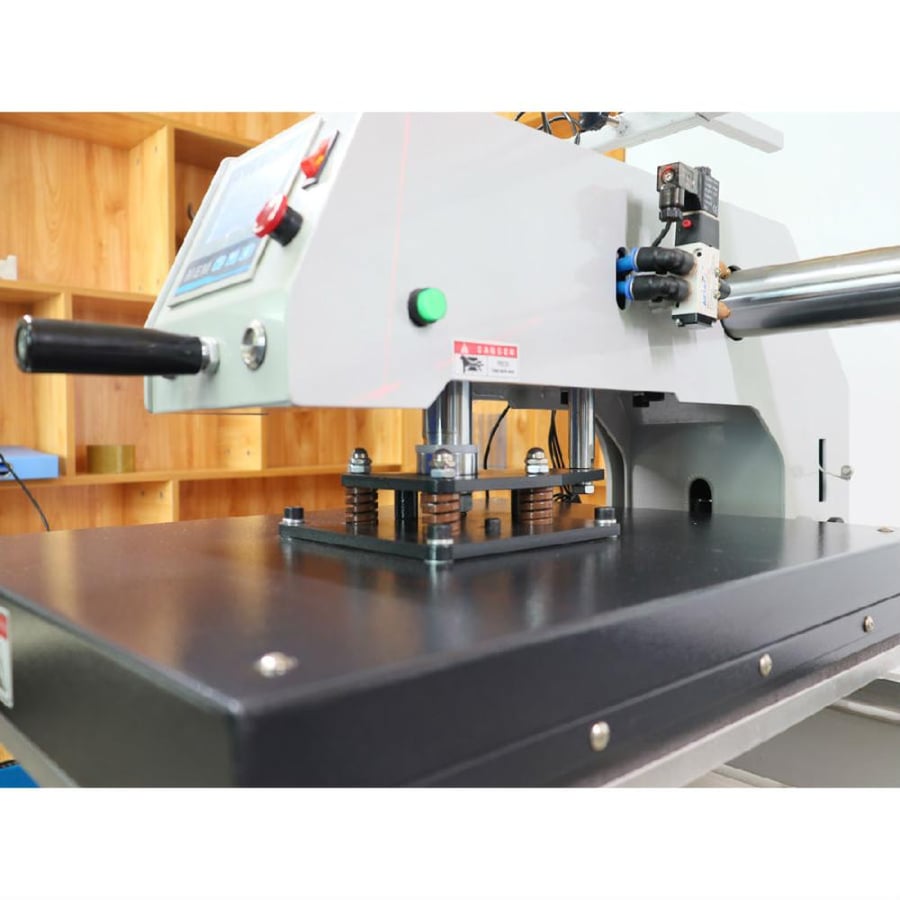
- Durable Design: Strong and stable structure ensures the piston operates continuously without being affected by vibrations.
- Strong pressure mechanism: to ensure excellent adhesion between the design and the material when printing.
- Increased productivity: Ability to operate two stations simultaneously to reduce production time and increase efficiency.
Design and performance:
- Sturdy metal frame: Ensures stability of the press during operation.
- Smart automatic control panel: for easy and precise temperature and time adjustment.
- Built-in laser system: allows for extremely precise positioning.
- Automatic pressing mechanism: ensures excellent adhesion between the design and the material.
Technical specifications:
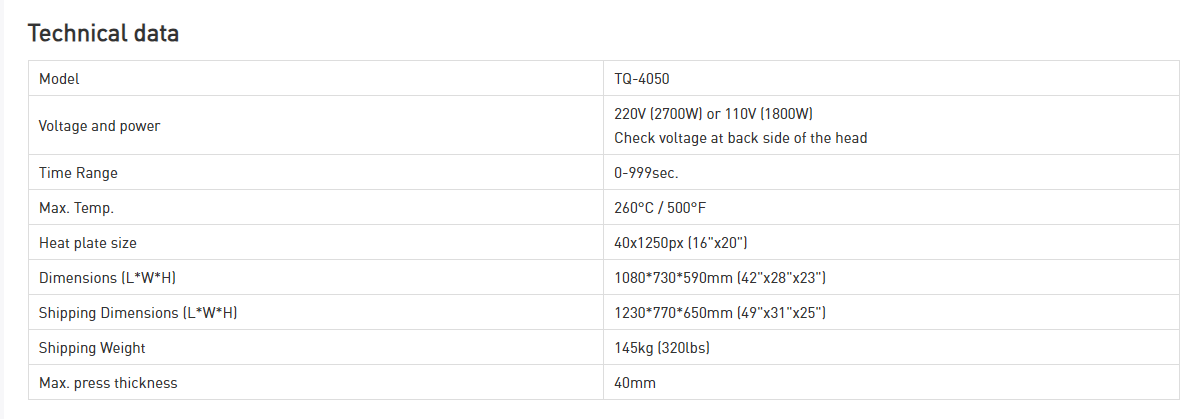
- Size: 40x50cm per station.
- Temperature control: up to 220°C to ensure flexibility and accuracy of printing.
- Digital Timer: Up to 999 seconds for precise timekeeping.
- Power consumption: 2700W to ensure high performance and efficiency.
- Operation type: Automatic.
- Ideal operating environment: temperature between 20-30°C and humidity between 40-70%.
Invest in the MEM TQ-4050 Laser Heat Press for high-quality, automatic heat transfer printing and professional results on a variety of materials with increased productivity and accuracy.
Here is the translation of the parts into Arabic:
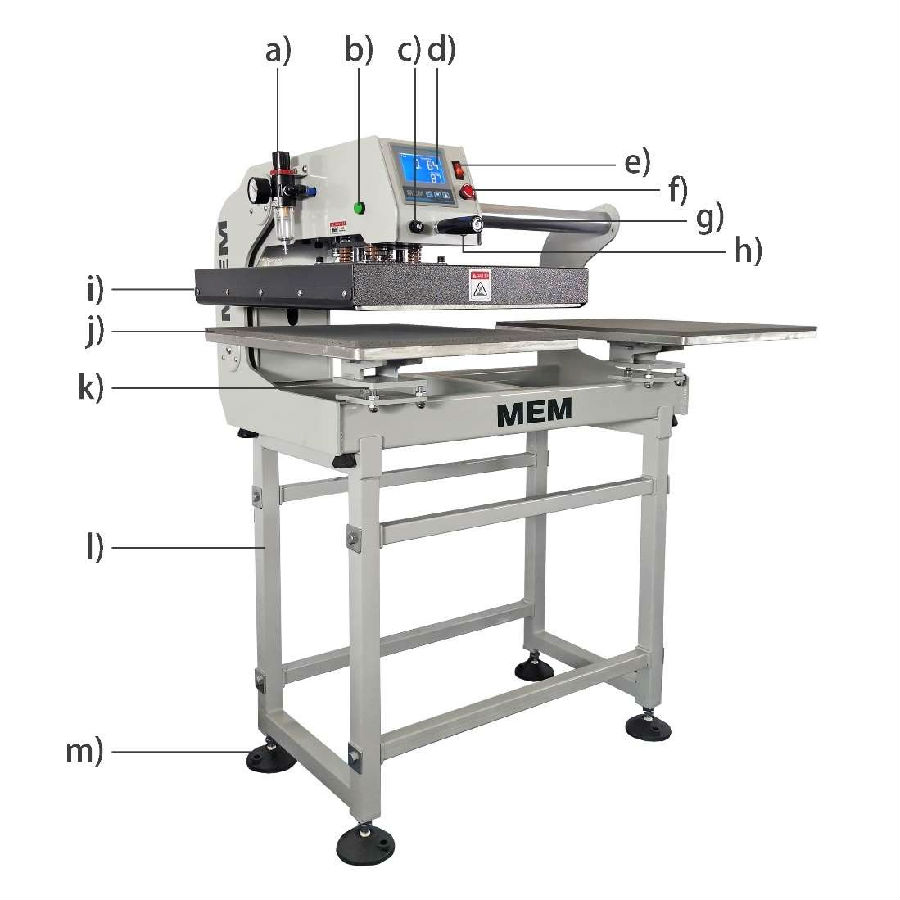
a. Air reducing valve
It is used to adjust the air flow within the system to reduce excess pressure and achieve the required balance during operation.
b. Push button controls (operates in manual mode)
Buttons are used to manually control the pressing process when the machine is operating in manual mode, allowing complete control over the process.
c. Fuse
An electrical protection device used to prevent any excessive power flow, helping to avoid malfunctions and damage caused by high electrical current.
d. Temperature controller
A device that controls and determines the temperature required to press the materials used, ensuring accurate printing results.
e. Power key
A switch used to turn a device on and off.
f. Emergency stop button
A button used to stop the machine immediately in emergency situations for increased safety and operator protection.
g. handle
A handle used to control an operation, such as opening and closing a piston.
h. Manual/semi-automatic transfer switch (not shown)
A switch used to switch between manual and semi-automatic modes to adjust the piston operation as needed.
i. Heating plate
The heating surface that is used to transfer designs into the target material during the pressing process.
j. lower base
The base on which the material is placed during compression, and which helps distribute the pressure evenly.
k. Bottom pressure balance system
A system to ensure even pressure distribution across the printed material to avoid distortion and achieve perfect results.
l. base
The basic structure that supports the device and provides stability during operation.
m. Height adjustable foot
Height adjustable foot to adjust the piston level to suit process requirements and ensure machine stability.