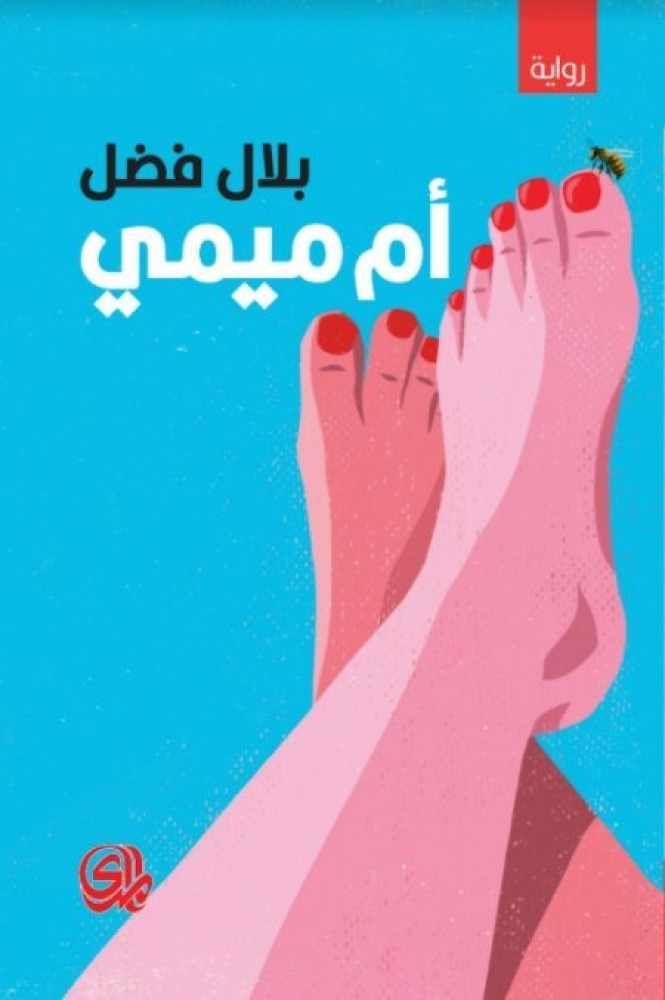
Mother Mimi
28ر.س
Out of Stock
Product description
Overview of the book I do not know exactly when that Nimese idea lit up in Shehrawi's mind, but most likely it happened when he saw my passionate looks that settled on the curves and bends of Rehab's body while she was dancing with integrity and conscience at her sister Samia's wedding, although I was not the only one mesmerized by Rehab who saw in the joy an opportunity to declare her capabilities that skillfully qualified her to surpass her sister, and that declaration was not for all who attended the wedding, who are a few anyway, but directed towards three of the groom's relatives who mostly attended to assist him in case of complications on the wedding night, but Rehab did not attract their attention, not only because they were not happy with the marriage believing in a promotional principle that was widespread at that time saying "Why pay more when you can pay less?", but because they felt that directing their gazes at the bride's sister's body, even if it was erupting like Vesuvius, would anger or embarrass her, and in fact they endured and succeeded because "Abu Samia" had decided to honor his son-in-law's guests with a special "Nimra" which I sometimes read about in some of the news of debauchery and red nights where the wealthy spend thousands of pounds and dollars, and I never imagined I would witness it firsthand without paying a single penny. The size of the apartment was not enough to host a singing band, it was barely enough for twenty or thirty chairs on which the selected guests sat on the cushions, but the cassette that emitted the most danceable and catchy songs did its duty and more, until it was suddenly silenced, then Abu Samia and two of his relatives or partners, I do not know, placed a medium-sized wooden table next to the small canopy where the newlyweds sat, while Umm Samia and Rehab had gone around us with large dishes containing selected pieces of kebab, kofta, macaroni with béchamel, and some stuffed cabbage and grape leaves. After most of us finished devouring that delicious homemade food, Abu Samia turned off the hall's lights, which remained somewhat illuminated by the light coming from the rest of the apartment, and as he restarted the cassette to play the opening of the song "Habibi Ya 'Aini," a woman dressed in a loose black abaya suddenly rushed in from somewhere, and Abu Samia helped her climb onto the table, which was too high for her to jump onto alone. After the woman in the abaya started swaying from the warming-up at the edge of the table, which was sturdy enough, Abu Samia turned on the hall's lights and began clapping. We followed him without much enthusiasm at first, but we soon got excited when we realized she was not wearing the abaya just to be polite as a relative of Samia, but she was about to perform a striptease dance, starting by slowly unbuttoning her abaya, and after a brief period that seemed like seconds, she began to shed the last piece of her clothing, a cloaked sheet, until the groom's scream stopped her, ordering her to stop because everything has its limits, as he said. The author is Bilal Fadl. Number of pages: 224. Year of publication: 2021. Publisher: Dar Al-Mada for Printing, Publishing, and Distribution. The cover of the book is paperback.

From Safwa