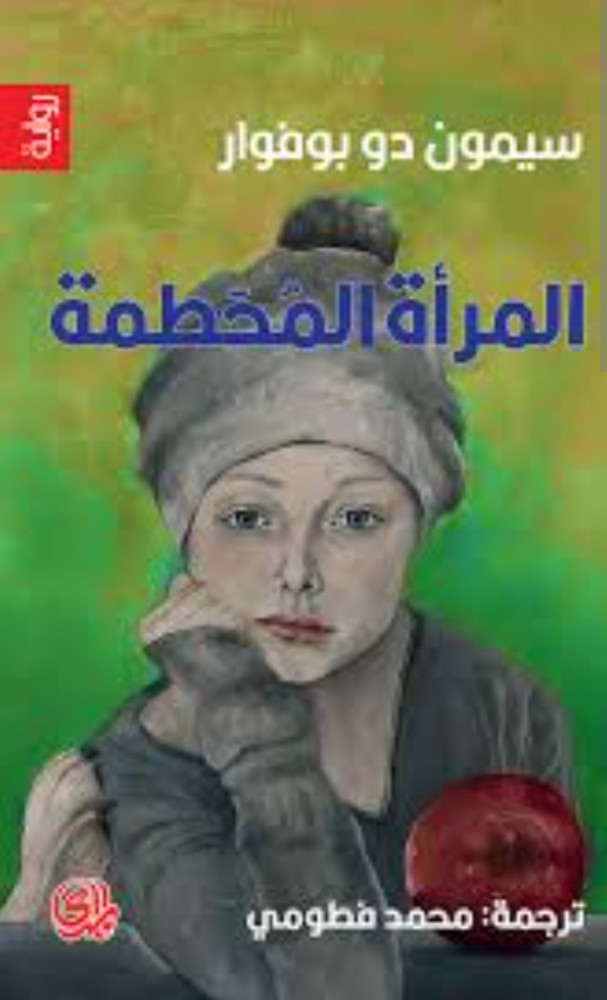
The broken woman
35ر.س
Product description
Summary of the book "The Broken Woman," a short trilogy of novels that marked a significant milestone in the creative world of Simone de Beauvoir, where she moved away from writing biographies for the first time to enter the world of imagination, the world of others from a neutral perspective. And although it seems that the author has opened the space for three models of women to express themselves freely and neutrally as we mentioned, she in fact gave them her pen and her concerns to express her opinion on existence and on the three enemies of women: society, the other, and age. A precise surgery in which Simone de Beauvoir succeeded with her smooth, simple, and deep style, and with her tangible philosophy for everyone. These are short novels but very harsh and impactful, in which the woman tried, cried, vowed, tore apart, weakened, resisted, and finally collapsed. But do not run away, O man, this is not trivial feminist writing where the woman screams in an incomprehensible frenzy demanding divinity on earth. We are facing one of the greatest faces of French culture, which did not earn its title out of favoritism or flattery, but because it revealed to society and especially to women their flaws and their share of responsibility in their failure, inability, or objectification. She talked about the marital relationship, meaning that the man will also find himself in these novels; he will see himself through a woman's eyes, and discover that he is a man because the woman exists. As if his success, desires, wealth, and strength are dead without spirit, except for the woman. She is the one who, if she wills, is the vessel that takes the shape of the container or the potter who determines the shape of the vessel. Did de Beauvoir not say on one occasion her famous phrase: "We do not born women, we become so," meaning that the word woman is not just superficial gender distinction, but a human attribute, a right, and an achievement, which can succeed or fail like any other achievement. An author of this weight and awareness, with the best way to educate women, will not fall into advocacy or defending women's rights by speaking on their behalf, but by criticizing them and making them discover their mistakes and encouraging them with the magic of storytelling to review their way of thinking. Personally, I see no more eloquent way for the idea than to make your targeted group see themselves as they tremble on the stage of life. The author's name: Simone de Beauvoir. Publisher: Al-Mada.

From Safwa