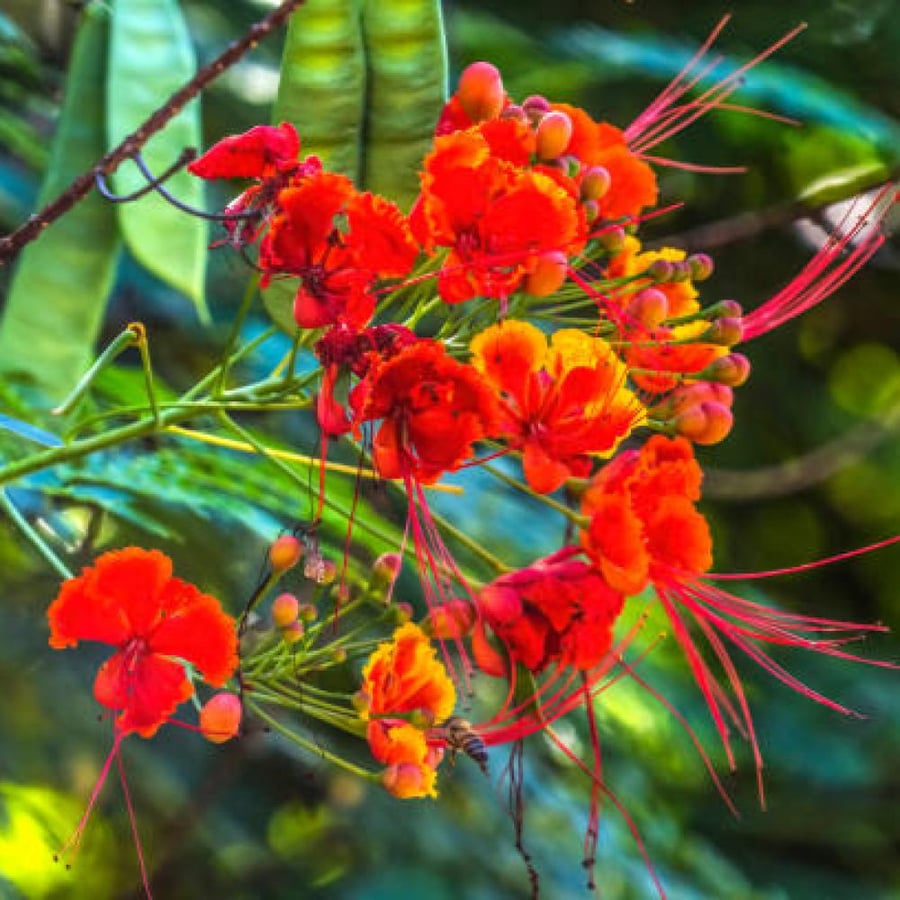
Red peacock flower seeds 50 seeds
7ر.س
Product description
Planting seeds of the red Peacock flower: A comprehensive guide
The red Peacock flower (Caesalpinia pulcherrima) is a tropical and subtropical shrub characterized by its bright red flowers that resemble peacock feathers, adding a touch of beauty and elegance to any garden.
Why plant the red Peacock flower?
Beauty: Its bright red flowers attract attention and add a touch of joy to any place.
Easy to care for: It adapts to various climatic conditions and tolerates drought.
Fast-growing: It grows relatively quickly and blooms in a short time.
Attracts beneficial insects: It attracts butterflies and hummingbirds.
How to plant seeds of the red Peacock flower
Seed preparation:
Scarification: Soak the seeds in hot water for 24 hours, then in cold water for another 24 hours. This process helps break the hard outer shell of the seed and speeds up germination.
Scoring: Slightly scratch the outer surface of the seed to facilitate germination.
Planting:
Soil: Use fertile, well-draining soil.
Container: Plant the seeds in small containers filled with prepared soil.
Depth: Bury the seed about 1 cm deep.
Watering: Keep the soil moist but not waterlogged.
Light and temperature:
Light: Place the containers in a sunny spot or under artificial light.
Temperature: Maintain a warm temperature around 25°C.
Transferring to soil:
Growth: After the seeds germinate and the seedlings become strong, you can transfer them to larger containers or directly to the ground.
Tips for caring for the red Peacock flower
Watering: Needs regular watering, especially during summer.
Fertilizing: Fertilize the shrub regularly with organic fertilizer.
Pruning: Regularly prune the shrub to maintain its shape and increase density.
Protection: Protect young seedlings from frost and strong winds.
Uses
Decorative: Used as an ornamental shrub in gardens and parks.
Fence: Can be used as a natural fence.
Attracts beneficial insects: It attracts butterflies and hummingbirds.
Problems you may face
Pests: The shrub may be affected by pests such as scale insects and others.
Diseases: It may suffer from some fungal diseases.
Additional tips
Site selection: Choose a sunny location for planting.
Soil: Tolerates poor and saline soils.
Tolerance: Tolerates drought and high temperatures.

Questions you might have