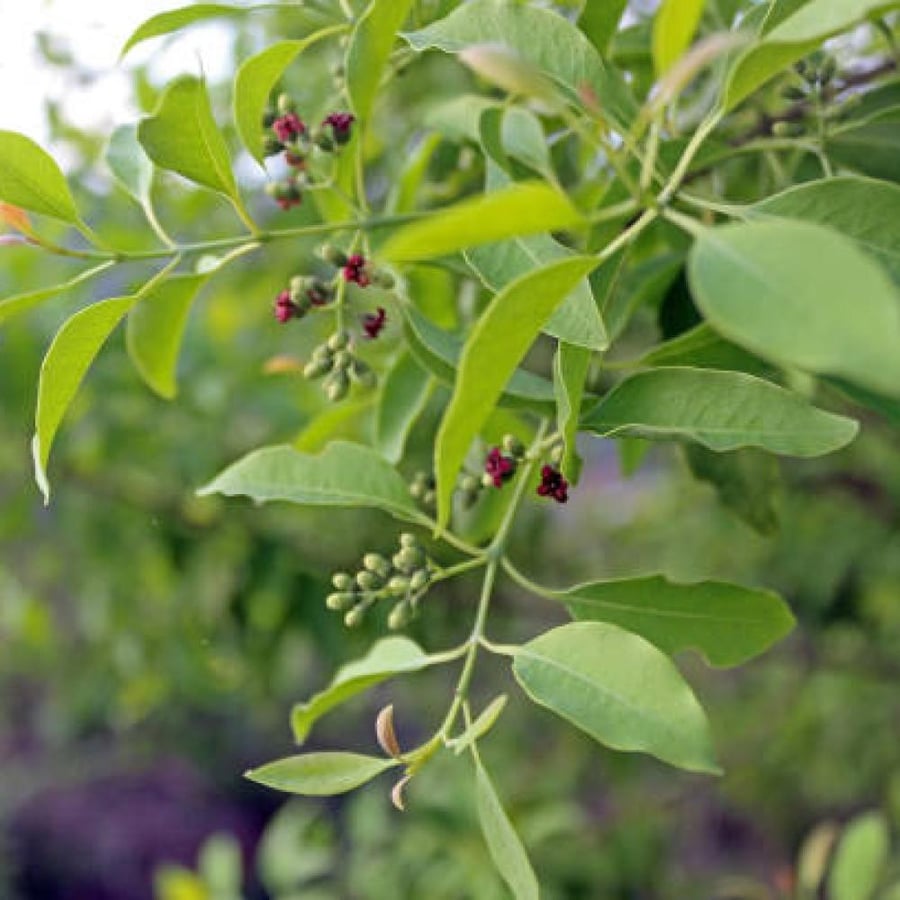
Arak tree seeds 50 seeds
9ر.س
Product description
Seeds of the Arak tree (Miswak)
The Arak tree, or Miswak, is a tree with historical and medicinal value, famous for its wood used in making Miswak. Growing the Arak tree is not difficult, but it requires some care and attention.
Seed Preparation
Soaking: Before planting the seeds, it is recommended to soak them in warm water for 24 hours to stimulate germination.
Cleaning: Clean the seeds from any dry or damaged parts.
Soil and Planting
Soil: The Arak tree prefers well-drained sandy soil, but it can grow in different types of soil.
Planting:
Depth: Plant the seeds at a depth of about 1-2 cm in the soil.
Watering: Keep the soil moderately moist after planting.
Lighting: The Arak tree needs full sunlight.
Tree Care
Watering: The tree needs regular watering, especially during summer, but it tolerates drought to some extent.
Fertilizing: The tree can be fertilized once a year with organic fertilizer.
Pruning: The tree can be pruned to maintain its shape and increase density.
Protection: The tree may be exposed to some pests and diseases, so it should be monitored regularly and necessary measures taken when needed.
Important Tips
Climate: The Arak tree prefers warm and moderate climates and tolerates drought.
Soil: It can grow in various soil types but prefers well-drained sandy soil.
Patience: The tree takes several years to reach its full size.
Benefits of Growing the Arak Tree
Medicinal Uses: Its wood is used to make Miswak, which has many benefits for oral and dental health.
Decorative: It adds aesthetic value to any garden or place.
Hedge: It can be used as a natural hedge.
Tolerance to Harsh Conditions: It tolerates drought and salinity.
Important Notes
Fast Growth: The Arak tree is considered a slow-growing tree.
Propagation: It can be propagated by seeds and cuttings.
Diseases: It may be susceptible to some fungal diseases.
Note: Before starting to cultivate any plant, it is advisable to check local information about climate and soil conditions in your area and ensure the plant is suitable for the intended location.
