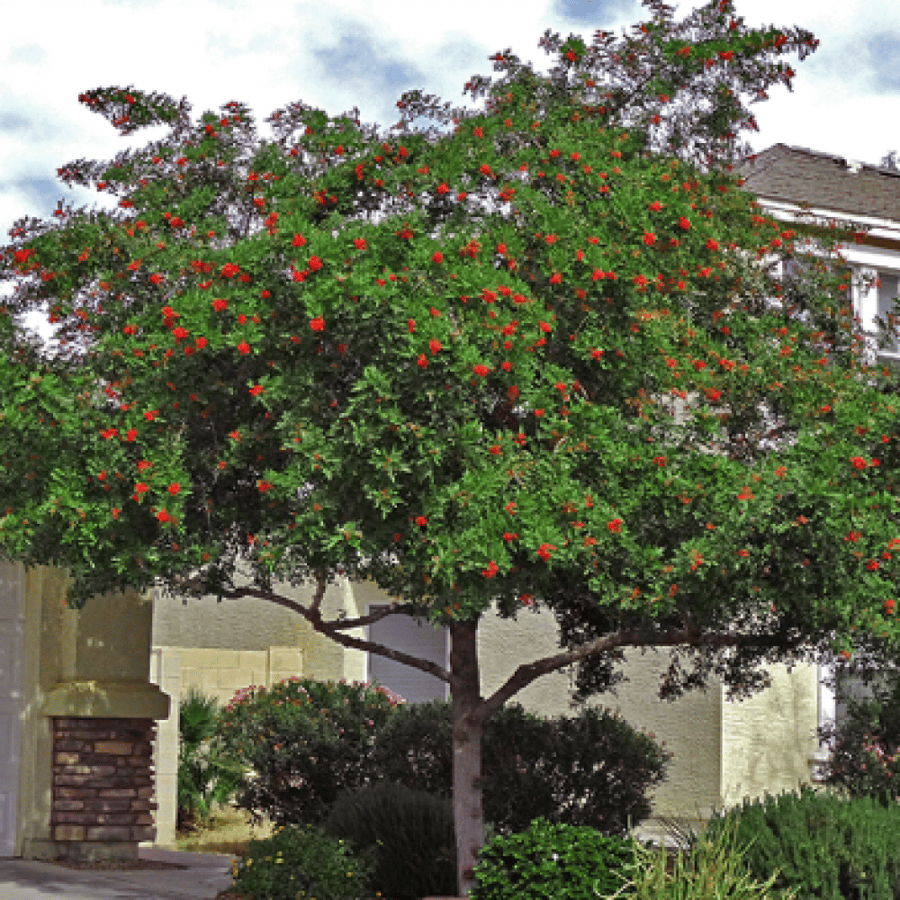


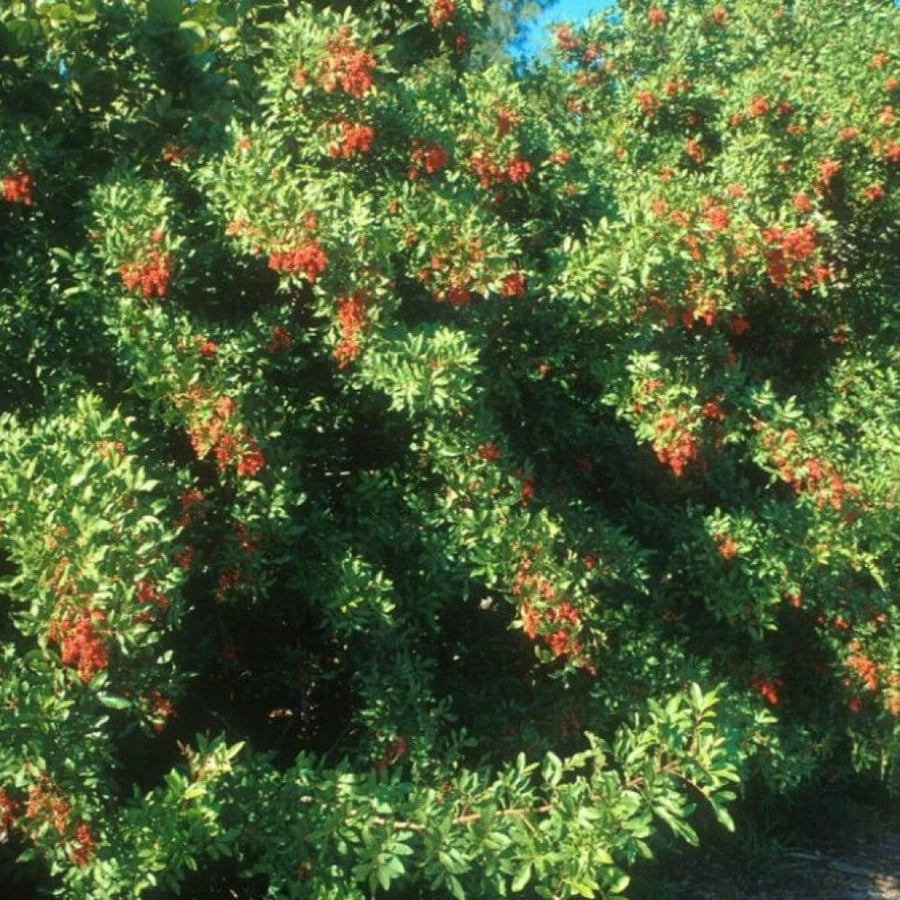


Brazilian pepper seeds, broad-leaved (Schinus terebinthifolius)
6ر.س
Product description
Common name: Brazilian pepper broad-leaved
Scientific name: Schinus terebinthifolius
Other names: Rose pepper - Florida holly
The Brazilian pepper is a perennial evergreen tree with sprawling branches and abundant shade, reaching up to 10 meters in height. It belongs to the cashew family. Its branches are leaning, resembling a vine, and it has alternate leaves exceeding 20 cm in length, with oval-shaped, serrated leaflets. Brazilian pepper is widely cultivated as an ornamental plant in frost-free areas of South America.
• Brazilian pepper broad-leaved flower: Small white flowers with five petals, borne in clusters measuring between 5 cm and 15 cm. It blooms from March to May and is a honey-producing flower preferred by bees.
• Brazilian pepper broad-leaved fruit and seeds: The fruits are pink, peppercorn-like, measuring between 0.5 cm and 0.7 cm, containing small red seeds inside.
• Season for propagating Brazilian pepper broad-leaved: It is planted at the end of winter, and can also be cultivated year-round in protected agricultural environments, enclosed or plastic-covered places where temperature and sunlight can be controlled, or where adequate lighting for the plant is available.
• Suitable climate and soil for Brazilian pepper broad-leaved: Requires full sunlight with some humidity, regular watering, and has moderate salt tolerance. It thrives in most well-drained soils and can tolerate temperatures as low as 5°C. It is sensitive to cold, dry winds, and is suitable for areas not exposed to frost.
• Method of cultivating Brazilian pepper broad-leaved: Propagated by seeds or cuttings.
• Benefits and uses: Grown for ornamental purposes and shade. The pink berries are used as spices in food. It is still used in herbal medicine in many South American countries.
• Native habitat of Brazilian pepper broad-leaved: Native to South America, also found in tropical and subtropical regions worldwide. It is cultivated in Saudi Arabia and Gulf countries.

From Buraydah
Questions you might have