



Acacia mangium tree seeds
8ر.س
Out of Stock
Product description
Common name: Acacia mangium
Scientific name: Acacia mangium
Also known as: Mangium acacia - Mangium tree - Acacia mangium
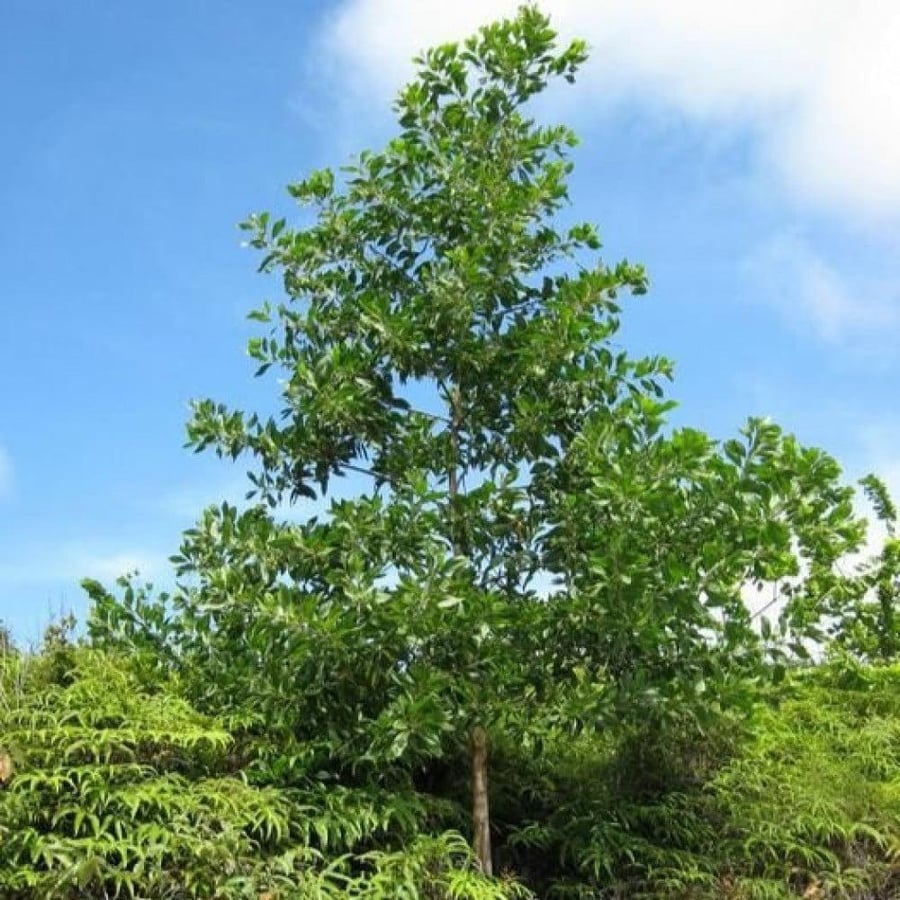
A large tree belonging to the legume family, it blooms at an early age and can exceed 30 meters in height, with a straight trunk diameter of over 60 cm. Its leaves are smooth, bright green, and it has a dense canopy at the top. It is a fast-growing tree, with an average height increase of 3-4 meters annually in tropical regions, and slower growth in areas farther from the equator. It is a hardwood tree that is non-splitting, making it suitable for furniture manufacturing. It also plays an increasingly important role in maintaining the commercial supply of forest products while reducing pressures on natural forest ecosystems.
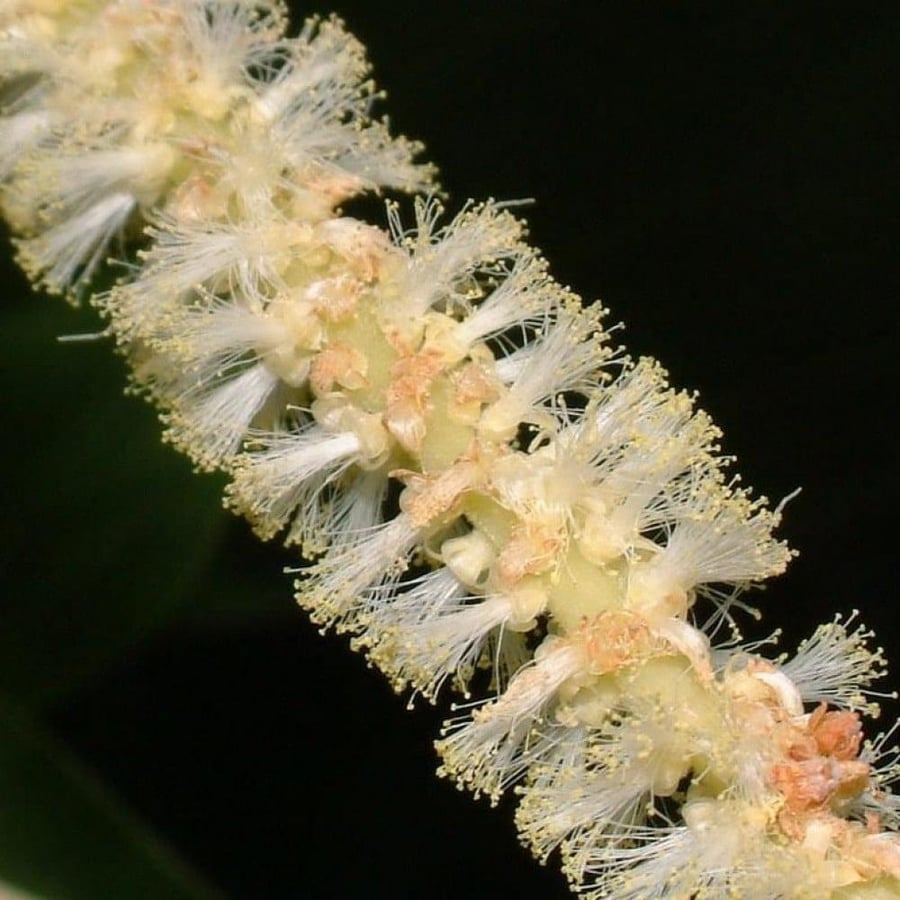
• Flower of Acacia mangium: Its small yellow flowers are dense and appear on long stalks at the ends of branches, blooming in summer.
• Fruit and seeds of Acacia mangium: Its fruits are broad, linear pods that are irregularly coiled, measuring 3 to 5 mm in width and 7 to 10 cm in length. Inside, they contain dark brown or black shiny seeds that are variable in shape, measuring 3 to 5 mm long and 2 to 3 mm wide. Seeds mature 6-7 months after flowering.
• Growing season of Acacia mangium: Spring is considered the best season for planting Acacia mangium.
• Suitable climate and soil for cultivating Acacia mangium: It is a drought-tolerant tree that withstands high temperatures and loves sunlight. It can be planted in most soil types and helps improve nitrogen cycling in low-fertility soils due to its dense root system.
• How to cultivate Acacia mangium: It propagates through seeds planted at a depth of 1-2 cm from the soil surface. It is preferable to soak the seeds in water for one or two days to accelerate germination.
• Benefits and uses: Its wood is considered one of the best types for furniture manufacturing. It also plays an increasingly important role in maintaining the commercial supply of forest products while reducing pressures on natural forest ecosystems. It is also planted for ornamental purposes along roads and in gardens.
• Native habitat of Acacia mangium: Australia, Indonesia, and Papua New Guinea.

From Buraydah
Questions you might have