

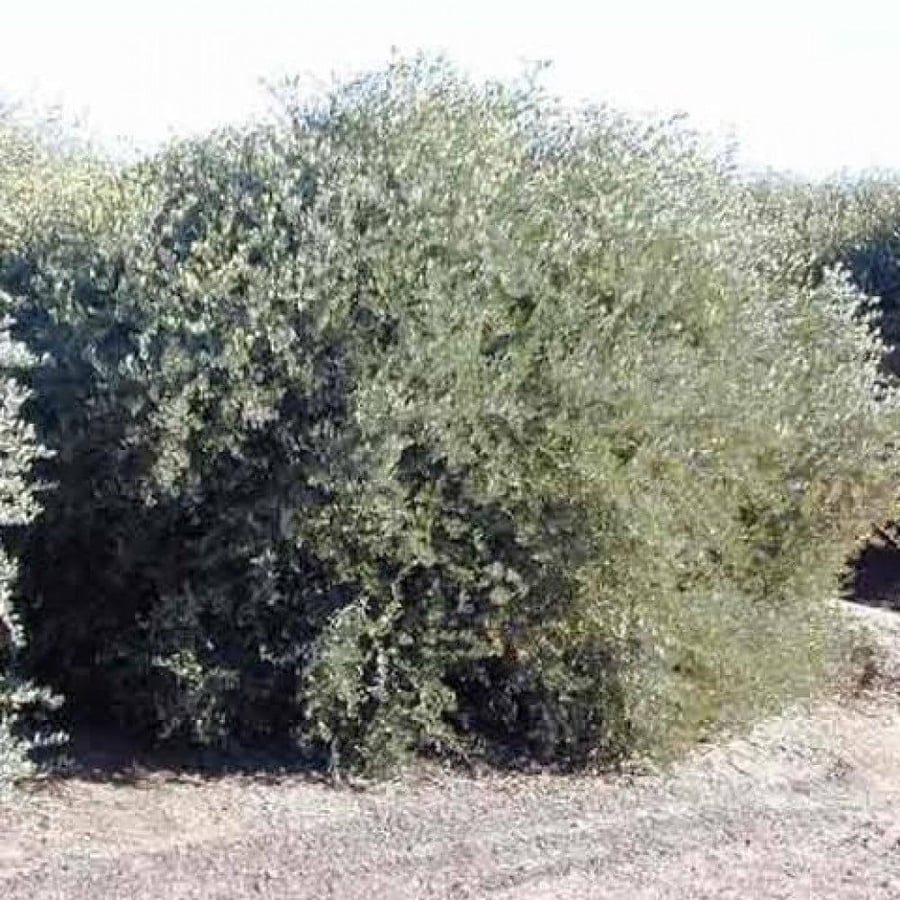

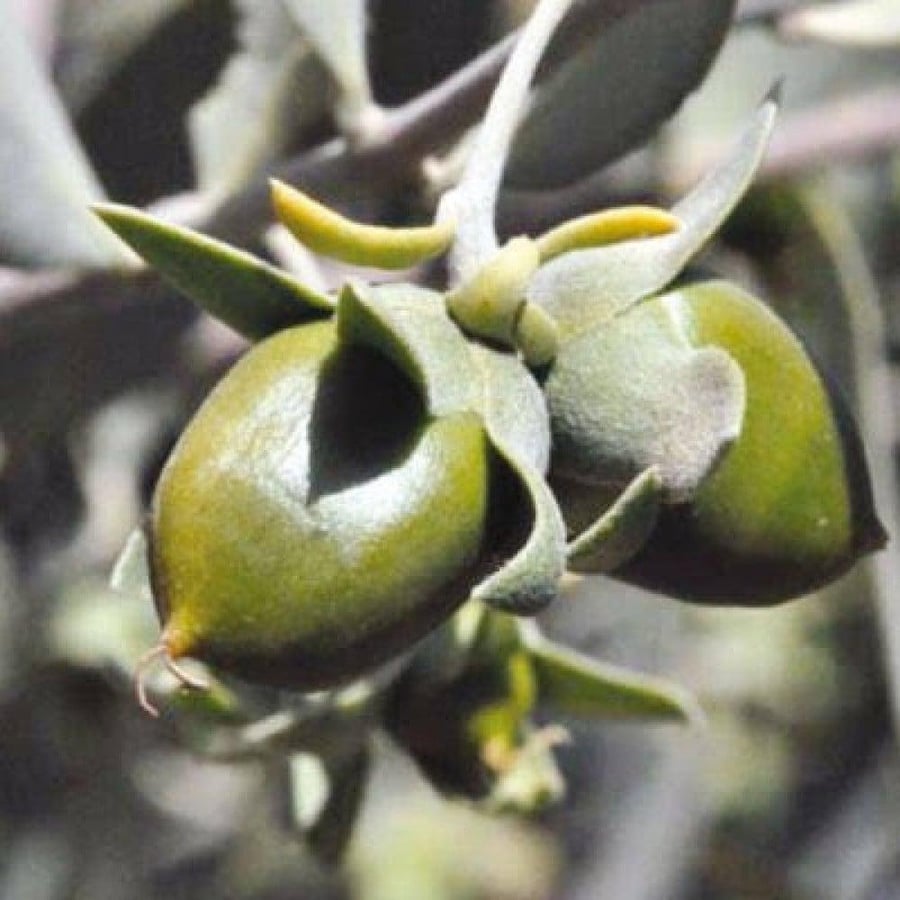


Jojoba seeds (Simmondsia chinensis)
7ر.س
Product description
Common name: Jojoba
Scientific name: Simmondsia chinensis
Also known as: Hohoba - Grey box - Wild hazelnut - Deer nuts
Jojoba is a wild plant that grows as a large shrub, evergreen, and lives for 100–150 years. The plant has a strong root system consisting of a deep taproot that can reach more than 10 meters in length, with a set of lateral roots branching from the taproot that are not superficial. These roots range in height from 1.5 to 4 meters, depending on the amount of rainfall or irrigation water. The leaves are oval-shaped and resemble olive leaves but are thick and leathery, covered with a thick layer of wax in the form of crystals to reflect the maximum amount of sunlight.
Jojoba flower:
Its small yellow flowers are scentless and lack petals, not attractive to insects, and bloom from the beginning of spring until early summer.
Jojoba fruit and seeds:
The fruit is usually solitary, sometimes in pairs or in clusters, with 2–10 fruits per cluster. The Hohoba fruit typically contains one elongated seed with a circular diameter, but sometimes there are two semi-circular seeds.
Jojoba planting season:
The best time to plant jojoba by seed is August, with germination occurring after 17 days. It can also be cultivated year-round in protected agricultural environments, enclosed or plastic areas where temperature can be controlled, and where adequate lighting and sunlight are available.
Suitable climate and soil for jojoba:
Jojoba tolerates high temperatures and cold weather, but for a plentiful crop, the ideal conditions are around 36°C during the day and 18°C at night. Jojoba is not suitable for cultivation in tropical areas or regions with heavy rainfall and prone to flooding. The best soil for growth is well-drained sandy soil, but it also tolerates high soil salinity and does not require much water.
Jojoba cultivation method:
It propagates through seeds planted at a depth of 2 cm from the soil surface. It can be fertilized with organic fertilizer at least once. Seeds should be soaked in a gibberellic acid solution at an appropriate concentration for 24 hours before planting. Care should be taken not to overwater, as this can cause seed rot and spoilage. After germination, watering should be gradually reduced.
Benefits and uses:
Oil and fuel production, known as green gold due to its economic importance. It is also suitable for developing vegetation cover in deserts.
Original habitat of jojoba:
Sonora deserts in North America, and it is also cultivated in the deserts of Saudi Arabia and Gulf countries.

From Buraydah
Questions you might have