
Seeds of the Salm tree
6ر.س
Product description
Common name: Salm Tree
Scientific name: Acacia ehrenbergiana
Among its names: Al-Sanṭ Al-Arnbergish
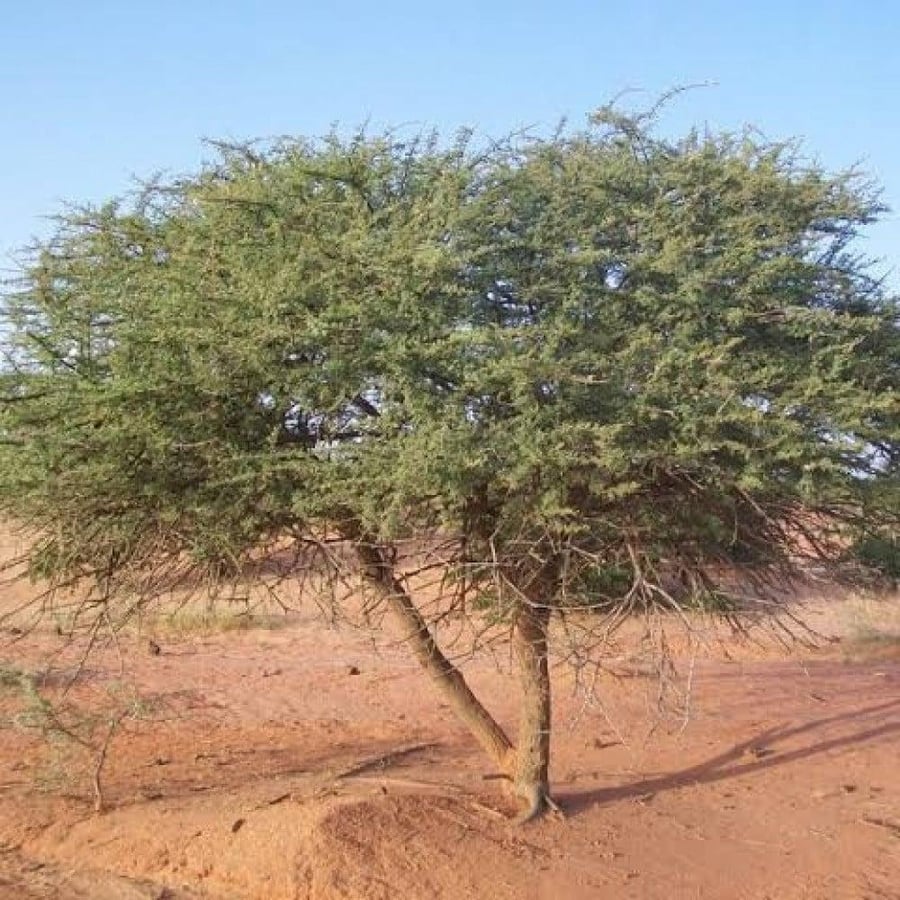
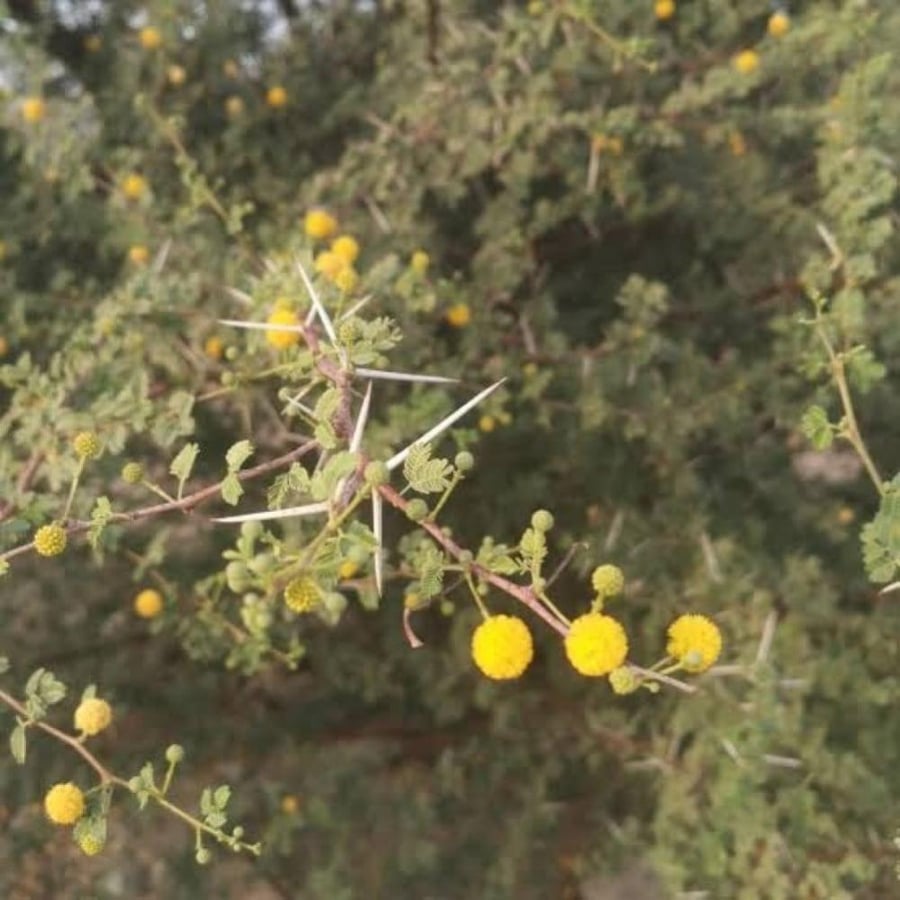
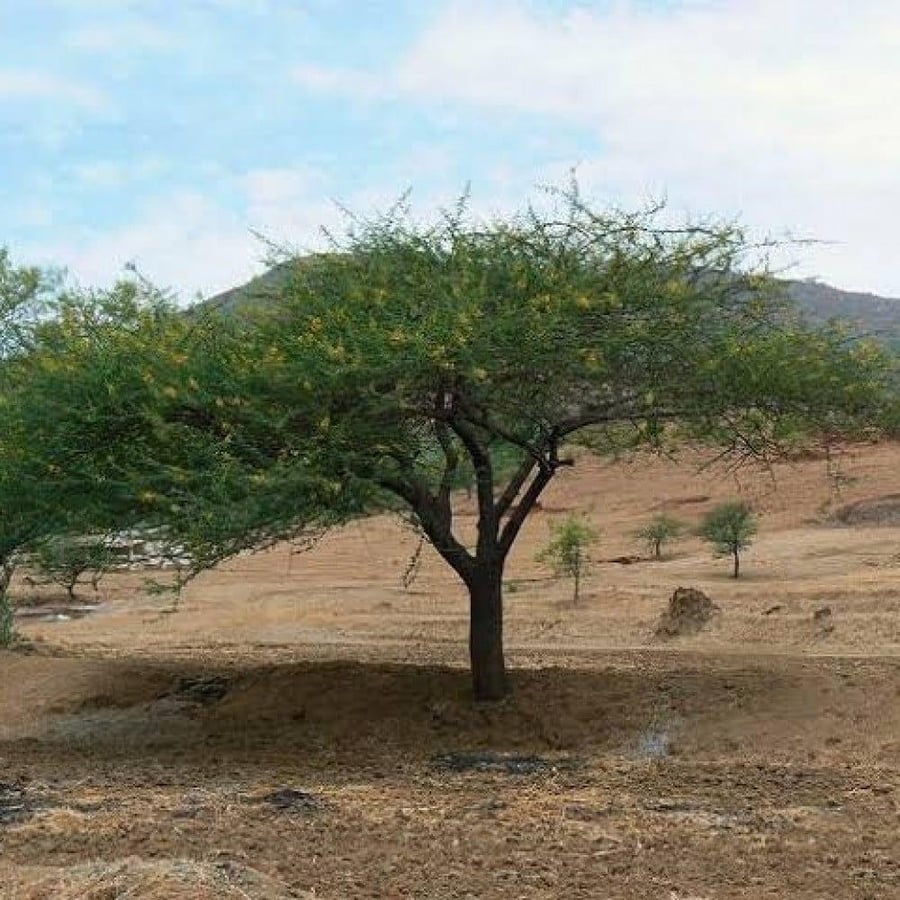
A tall, spiny desert tree or shrub widely distributed, reaching a height of 5.5 meters, known as Salm. It grows in groups in lowlands and valleys where rainwater and clay deposits gather. Salm branches at the soil surface into several branches with greenish-brown bark that is peelable and similar to the bark of Sidr Acacia, which can cause confusion in identification. To compare the two species, Salm has longer white spines than its leaves.
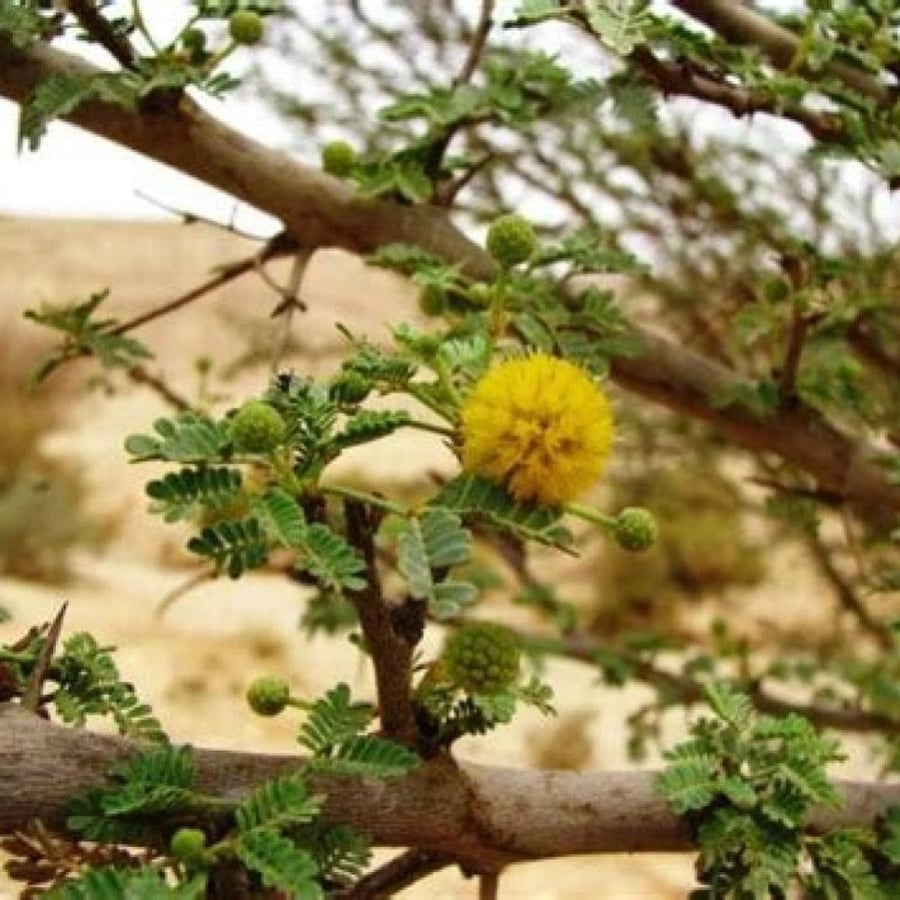
Flowers of the Salm tree: The flowers are in yellow, upright clusters, blooming from February to April.
Fruit and seeds of the Salm tree: Its fruits resemble carob or bean pods, rich in protein and with a high sugar content, about 10 cm in size. Its thorns can puncture vehicle tires. Like any thorny plant, it can be harmful but is not toxic.
Salm tree germination season: It is planted in spring, and can also be cultivated year-round in agricultural reserves, enclosed or plastic-covered areas where temperature can be controlled, sunlight is available, or adequate lighting for the plant exists.
Suitable climate and soil for the Salm tree: Salm trees are among the most drought-tolerant trees. Watering can be gradually reduced after the first year of planting. It grows rapidly during heavy rains; it is also drought and frost resistant, and grows in desert soils.
Method of cultivating the Salm tree: It reproduces through seeds planted at a depth of 1 cm to 2 cm from the soil surface.
Its benefits and uses: A food source for many desert animals such as camels, and its wood is used to make household furniture.
Original habitat of the Salm tree: Widely spread throughout the Arabian Peninsula.

From Buraydah
Questions you might have