
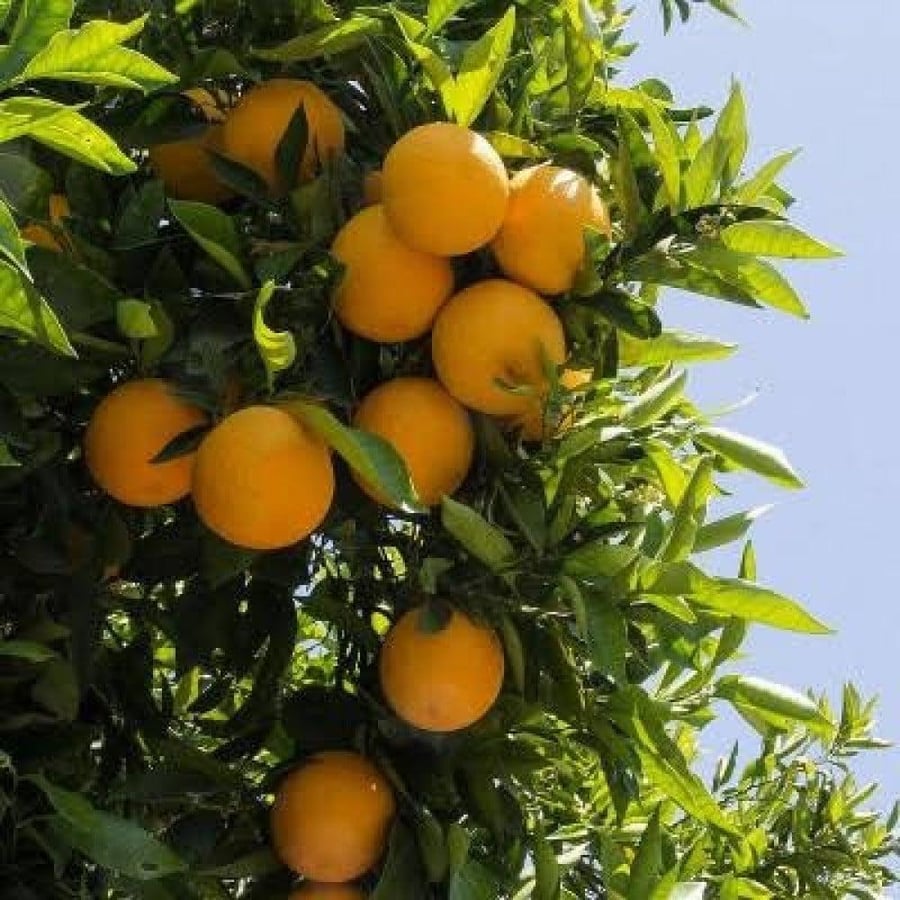

Bitter orange seeds - Citrus origins (Citrus aurantium)
6ر.س
Product description
Common name: Orange jasmine
Scientific name: CITRUS AURANTIUM
Also known as: Abu Safir
Orange jasmine is a perennial evergreen tree belonging to the citrus genus of the Rutaceae family, reaching a height of up to ten meters. Its leaves are dark, leathery, and have spiny branches, with deep-rooted roots penetrating the soil. Orange jasmine is considered the most important rootstock for citrus grafting, as grafted trees grow strongly and produce high-quality fruit.
• Grafting:
Orange jasmine trees are grafted by taking a part (scion) from a citrus tree, whether orange, lemon, or other citrus, with excellent fruit quality and specifications. This scion is placed on the trunk (graft), which is the process that makes the tree bear fruit. It is then fixed in a specific way through a cut or wound on the original tree, known to specialists. Grafting is usually done at the end of winter, in February.
• Orange jasmine flower:
The flowers are white with a pleasant fragrant scent, blooming in spring.
• Fruit and seeds of orange jasmine:
The fruit is large, round, with a reddish-orange color, rough texture, and a sour taste similar to lemon.
• Orange jasmine propagation season:
The best time for planting orange jasmine is in February and March, but it can be cultivated year-round in agricultural greenhouses, enclosed or plastic-covered areas where temperature can be controlled, and where the plant receives adequate sunlight.
• Suitable climate and soil for orange jasmine:
Orange jasmine trees tolerate severe cold, high temperatures, and high humidity. They prefer heavy clay soil but can adapt to calcareous and medium soils. Regular watering is essential.
• How to plant orange jasmine:
It propagates through air layering, cuttings, or seeds at a depth of 1-2 cm from the soil surface. It can also be fertilized with organic fertilizer at least once.
• Benefits and uses:
It is cultivated for its fruit and for ornamental purposes along roads. It is also the most commonly used rootstock in citrus grafting.
• Native homeland of orange jasmine:
China, from where it spread to many parts of the world, including Iraq, the Levant, Saudi Arabia, and many Arab countries.

From Buraydah