

Safflower plant seeds - Carthamus tinctorius
7ر.س
Product description
Common name: Safflower - Carthamus - Jurgum
Scientific name: Carthamus tinctorius
Also known as: Fake saffron
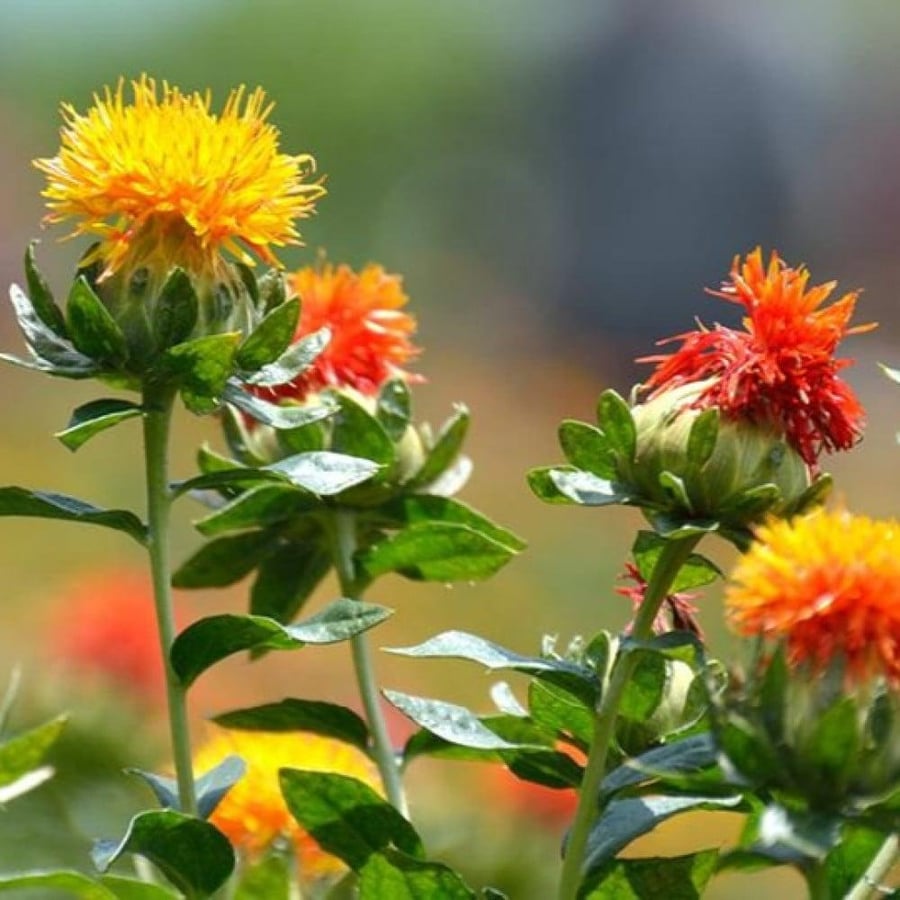
Safflower is a winter annual plant belonging to the Asteraceae family, reaching a height of up to 150 centimeters. Its leaves are green and lance-shaped, and it has attractive flowers from which a product similar to saffron is extracted. Some people grind it to adulterate saffron because of its resemblance, and it is also similar to turmeric, but turmeric has a stronger taste and different uses.
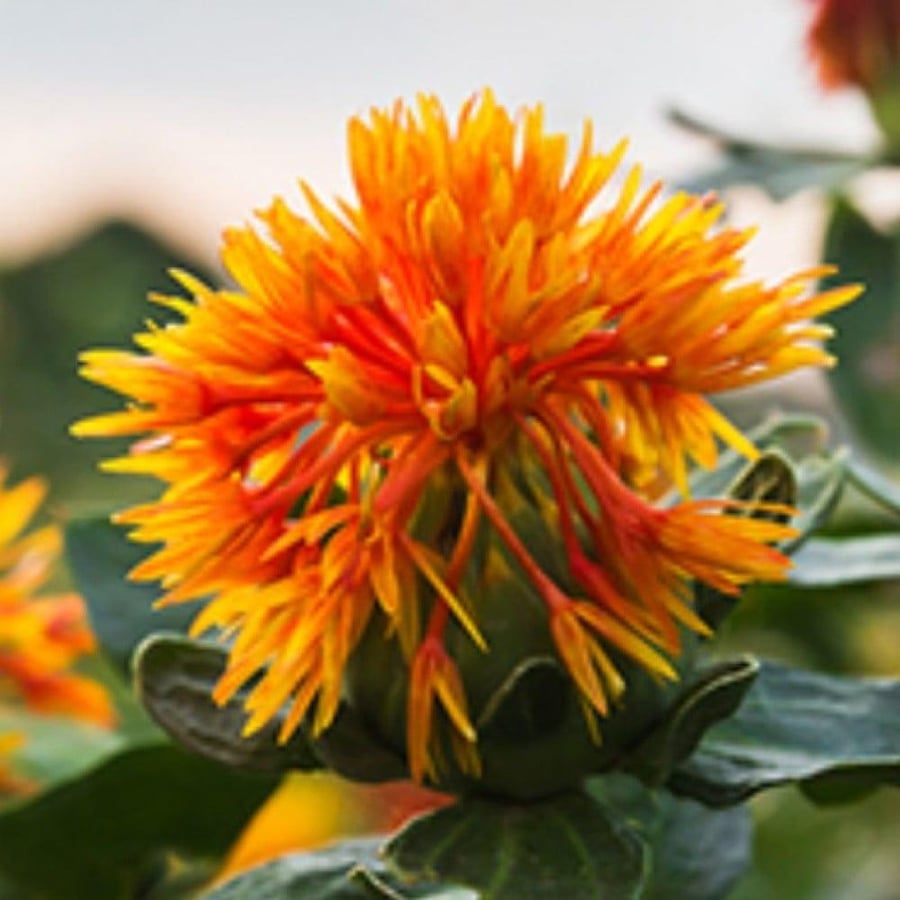
Safflower flower: Its flowers are yellow with an orange tint, small in size, forming clusters, and bloom in spring.
Safflower seeds - Carthamus - Jurgum:
Their seeds are medium-sized, white, and smooth.
Germination season:
It is cultivated in the autumn season, and can also be grown year-round in agricultural greenhouses, enclosed or plastic places where temperature can be controlled, sunlight reaches the plants, or where adequate lighting is available.
Suitable climate and soil for safflower cultivation:
Safflower grows in various soils, including clayey or sandy soils with good drainage and aeration. It loves sunlight, is resistant to frost and drought.
How to cultivate safflower - Carthamus - Jurgum:
It reproduces by seeds planted at a depth of 1-2 cm from the soil surface. It can be fertilized with organic fertilizer at least once during flowering to accelerate growth and development.
Its benefits and uses:
From safflower seeds, oil with medicinal value and rich in nutrients is extracted. Safflower is a source of health benefits, contributing to lowering blood cholesterol levels, aiding in weight loss, improving hair and skin health, and boosting the immune system. It is also used for food coloring and is similar to saffron.
Initial Australian studies have shown that safflower oil is a high-quality lipid oil that can be used for energy production. It produces fewer emissions than traditional petroleum-based products, can be recycled and reused, and decomposes in an environmentally friendly manner.
Original homeland: Africa and India, and it is cultivated in many Middle Eastern countries.

From Buraydah