
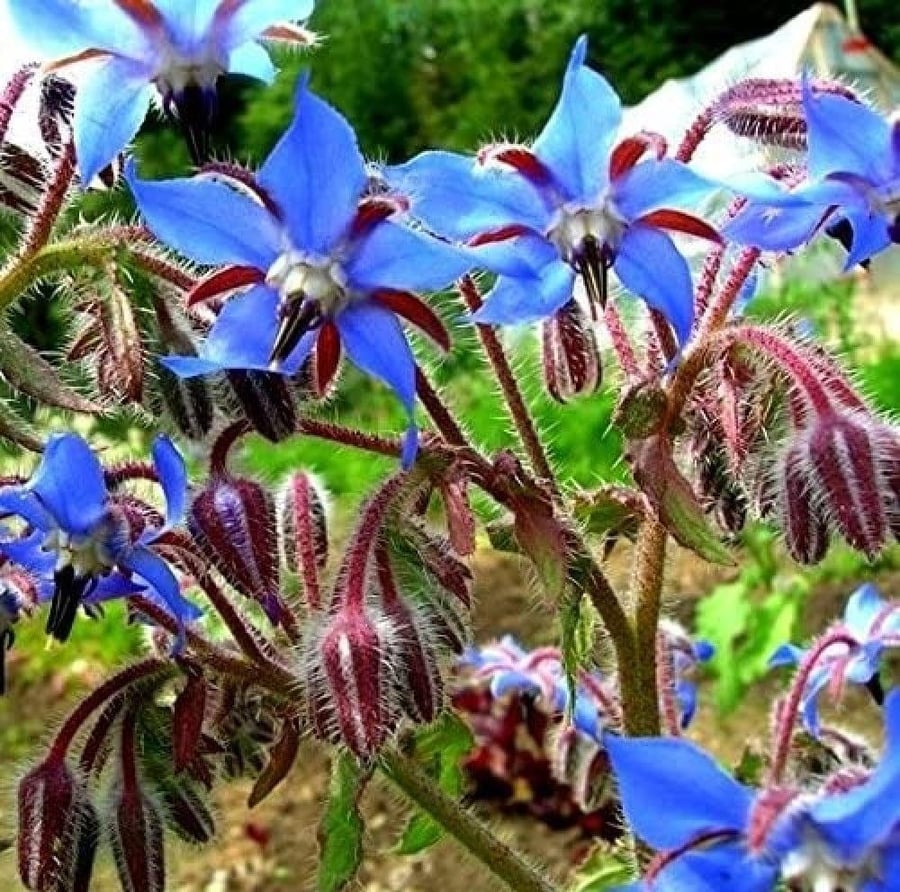


Bee bread seeds - borage - alhhamham
7ر.س
Product description
Common name: Borage
Scientific name: Borage officinalis
Other names: Abu Al-‘Irq, Lisan Al-Thawr, Al-Hamham, Al-Qas’ain
The naming of this plant as "Bread of the Bees" comes from its richness in pollen dust and nectar, which bees use to feed the larvae of males and workers. In beekeeping, the term "bee bread" refers to the larval food made of honey and pollen dust, hence it is called "bee bread." It is a seasonal plant with a hollow, succulent stem that reaches about a meter in length. Its leaves are oval-shaped, over 10 cm long, covered with dense hairs or fuzz that cause itching when touched.
Bee bread flower: small, not exceeding 2 cm in diameter, star-shaped, located at the top of branches with three petals, brightly colored in blue or purple, blooming in spring.
Date palm seed: the seeds are inside the fruits, which are green at the beginning of growth, and when dried, they turn dark brown. They have a hard, rough shell and retain viability for up to five years.
Germination season: bee bread seeds are planted in September and October, and can also be cultivated year-round in protected agricultural environments, enclosed or plastic places where temperature can be controlled, and where they receive sunlight or adequate lighting.
Suitable climate and soil for cultivating bee bread: It is a winter wild plant capable of tolerating low temperatures and moderate climates, but it does not withstand high temperatures. It can be grown in light clay soils, fertile yellow lands, and newly reclaimed land. It is frost-resistant and requires regular watering.
Method of cultivating bee bread: It reproduces through seeds planted at a depth of no more than 1 cm from the soil surface, after soaking them in water for at least 24 hours. It can also be fertilized with organic fertilizer at least once during flowering to accelerate growth and development.
Its benefits and uses: It is cultivated to feed bees, often planted near apiaries in England, France, the Levant, and recently in Egypt, due to its medicinal uses and benefits for honey.
Original habitat: Its original habitat is the Alps and the Levant region. It is cultivated in Egypt, Saudi Arabia, and many Arab countries.

From Buraydah
Questions you might have