Desert thorn seeds
20ر.س
Out of Stock
Product description
Common name: Al-‘Arafj
Scientific name: Rhanterium epapposum
Also known as: Rhanterium
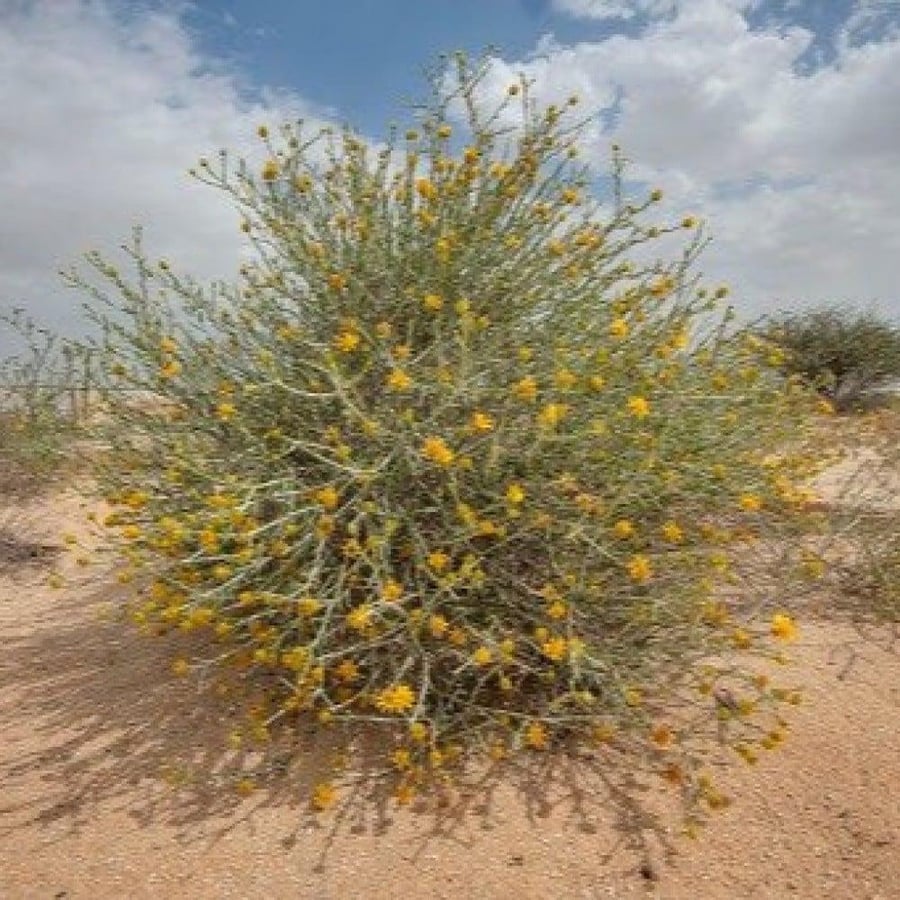
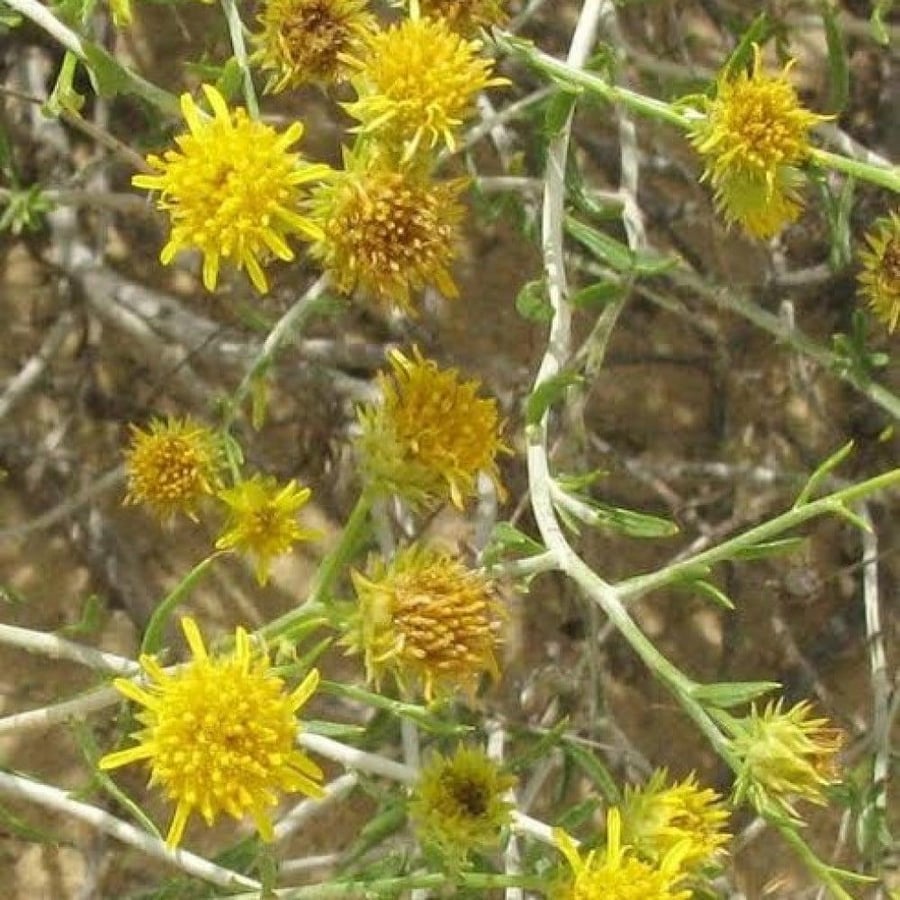
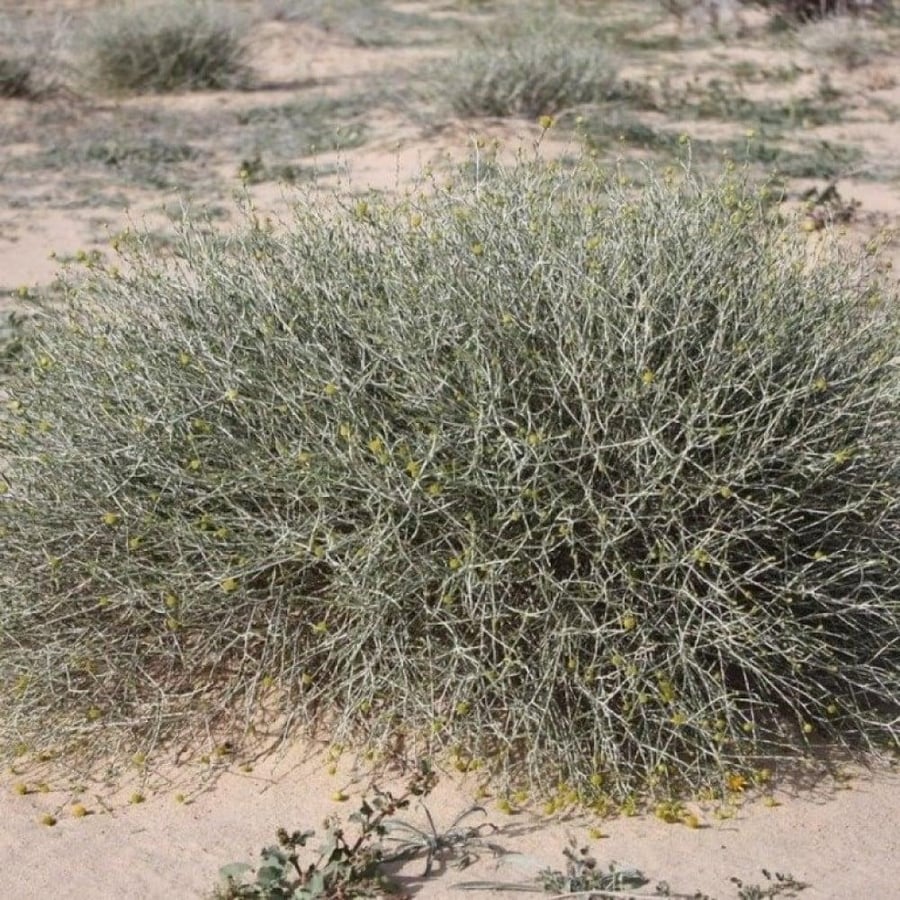
Al-‘Arafj is a short shrub with a regular round shape, growing to a height of 40–80 cm, with silvery white branches, and small alternate, lance-shaped leaves. The flower of the Al-‘Arafj is the national flower of Kuwait.
• Flower of the Al-‘Arafj plant: small yellow flowers that appear in spring.
• Fruit and seeds of the Al-‘Arafj plant: small fruits containing 6-8 seeds each.
• Growing season of the Al-‘Arafj plant: seeds are planted late winter and in spring, and can also be cultivated year-round in agricultural reserves, enclosed or plastic-covered areas where temperature can be controlled, sunlight reaches, or adequate lighting is available.
• Suitable climate and soil for the Al-‘Arafj plant: grows in shallow sandy lands and soil with high gravel content, highly resistant to salinity. All these traits indicate that this plant is highly adaptable to harsh desert conditions. It requires direct sunlight and is watered regularly.
• Method of cultivating the Al-‘Arafj plant: propagated by seeds at a depth of 1 cm – 2 cm from the soil surface, and can be fertilized with organic fertilizer at least once.
• Benefits and uses: Al-‘Arafj is considered one of the best desert plants for camel grazing, used as a fuel source, and due to overgrazing, it has become a rare plant in some areas where it was once common.
• Original habitat of the Al-‘Arafj plant: found in Saudi Arabia, Gulf countries, Iraq, and Kuwait.

From Buraydah
Questions you might have